





Hello world!
Welcome to WordPress. This is your first post. Edit or delete it, then start


Free shipping over $100

Free return over $500

Quality checked by our team

Shop with an expert



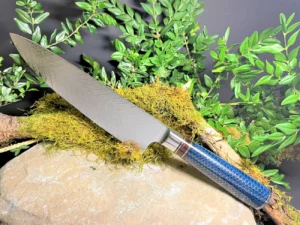
Damascus knives have captivated blade enthusiasts for centuries with their distinctive wavy patterns and legendary reputation. When I first encountered these remarkable blades, I was immediately struck by their unique beauty and craftsmanship.
However, despite their popularity, there’s much about these handcrafted treasures that remains shrouded in mystery. In fact, each Damascus knife is forged with multiple layers of steel—some containing up to 512 layers of D2 steel folded together and heat-treated for exceptional durability. While many sellers boast about their Damascus knives being tough and versatile for busy cooks, not all Damascus blades deliver on these promises. From their multiple steel layers that resist cracking to their reduced need for sharpening compared to other materials, these knives offer significant advantages for both kitchen and outdoor use.
In this comprehensive guide, we’ll explore what truly makes Damascus knives special, examine the different types available today, and most importantly, reveal the insider secrets that master bladesmiths typically won’t share with the average buyer.
Beyond their striking appearance, Damascus knives possess a rich history spanning thousands of years. Originally produced in India around the 1st century BC, these celebrated blades made their way throughout the ancient world, earning legendary status for their distinctive appearance and remarkable cutting abilities.
The etymology of “Damascus steel” remains a fascinating subject of debate among historians and metallurgists. Several plausible origins exist for the name. First, these blades were commonly traded in Damascus, Syria, a major commercial hub during medieval times. Additionally, some scholars believe the name derives from the Arabic word “damas,” meaning “water” – an apt description of the flowing patterns characteristic of these blades.
Islamic scholars from as early as 800 CE mentioned “damascene” or “damascus” swords in their writings. Although many of these blades were sold in Damascus, historical evidence indicates they weren’t necessarily manufactured there but rather imported from elsewhere.
Throughout history, these weapons gained mythical status among warriors. During the Crusades, European fighters encountered these superior blades that reportedly cut through their ordinary swords without losing sharpness. This battlefield introduction cemented their legendary reputation in Western consciousness.
The crucial distinction many knife enthusiasts miss is that traditional Damascus steel and today’s Damascus knives are fundamentally different. True historical Damascus steel, also called wootz, originated in ancient India as a crucible steel characterized by a unique crystalline structure.
Wootz production involved melting iron with carbon in sealed clay crucibles under specific conditions, creating steel with exceptional carbon content and distinctive banding. This ancient process mysteriously disappeared around 1750 AD, possibly due to depleted ore sources containing essential trace elements like vanadium and tungsten.
Modern Damascus knives, conversely, are typically pattern-welded steel – completely different in composition and manufacturing method. Contemporary bladesmiths stack alternating layers of different steel alloys, forge-weld them together, then manipulate this layered billet to create visually similar patterns.
This distinction became formalized in 1973 when bladesmith William F. Moran presented his “Damascus knives” at the Knifemakers’ Guild Show, effectively popularizing pattern-welded steel under the Damascus name. Though technically incorrect, today’s knife industry widely accepts the term “Damascus” for these pattern-welded creations.
The striking esthetic appeal of Damascus patterns isn’t merely decorative but reflects the blade’s internal structure. In authentic Damascus knives, these distinctive markings reveal the marriage between hard, brittle high-carbon steel and softer, more flexible low-carbon steel.
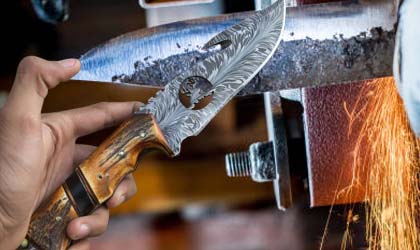
Each pattern signifies specific qualities in the knife. The intricate swirls and waves result from controlled manipulation during the forging process, where steel layers are folded, twisted, hammered, and etched. Contemporary smiths can create specific designs like ladder, raindrop, or feathered patterns – each requiring different techniques.
Furthermore, these patterns serve a practical purpose in identifying genuine Damascus from imitations. Authentic Damascus displays patterns throughout the entire blade – not merely surface etching or laser engraving. When acid-etched, the different steel layers react distinctly, with softer layers corroding faster to create natural contrast that showcases the true depth of craftsmanship.
Understanding the reality behind Damascus knives helps appreciate both their artistic value and functional quality. Whether crafted through ancient crucible techniques or modern pattern-welding, these remarkable blades continue to represent the pinnacle of bladesmithing artistry.
Modern Damascus knives come in various forms, each designed for specific uses ranging from outdoor survival to culinary arts. The distinctive wavy patterns make these blades not just tools but conversation pieces, regardless of their specific category.
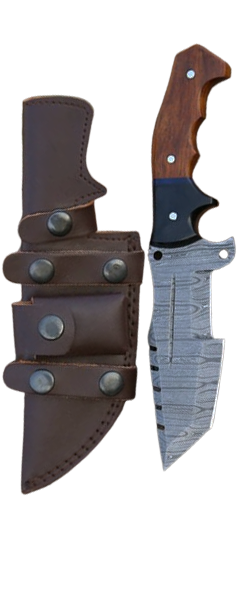
Fixed blade Damascus knives feature a solid construction where the blade and tang form a single piece of metal. This design eliminates moving parts, creating a stronger knife that excels in demanding situations. Outdoor enthusiasts particularly value these knives for their reliability and durability.
The tang construction plays a crucial role in quality fixed blade knives. Full tang designs, where the steel extends through the entire handle, provide superior strength compared to partial tang alternatives. These knives typically feature handles made from materials like stabilized wood, bone, or modern composites secured with pins or epoxy.
Fixed blade Damascus knives excel in hunting, camping, and tactical applications where dependability matters more than compactness. Their solid construction handles batoning (splitting wood by hammering the knife through it) and other heavy-duty tasks that would damage folding knives.
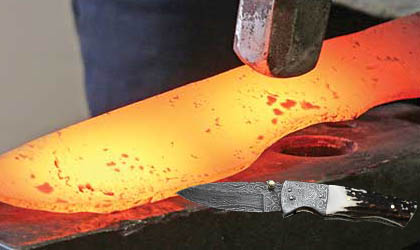
Damascus folding knives merge the beauty of pattern-welded steel with everyday practicality. These compact tools feature hinged blades that fold into the handle for safe carrying. The mechanisms range from simple slipjoints to sophisticated locking systems like liner locks or frame locks.
Modern Damascus pocket knives have evolved significantly, incorporating premium materials like titanium for frames and carbon fiber for handle scales. Many feature ball-bearing pivot systems for smooth operation. Their portability makes them ideal for everyday carry while still showcasing the distinctive Damascus patterns that knife enthusiasts prize.
What sets premium folding Damascus knives apart is the attention to detail. Master craftsmen often incorporate intricate bolsters, custom thumb studs, and perfectly matched handle materials that complement the blade’s pattern.
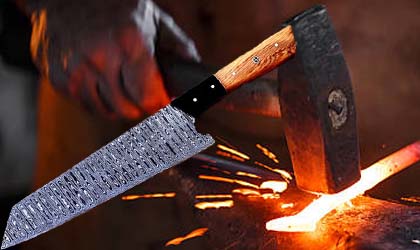
Damascus kitchen knives combine functionality with visual appeal in culinary environments. These knives typically feature harder steel cores (often VG10 or AUS-10) wrapped in softer Damascus layers, creating an optimal balance of edge retention and toughness.
Chef’s knives remain the most popular Damascus kitchen blade, featuring 8-10 inch blades with versatile profiles for multiple cutting techniques. Specialty options include nakiri knives for vegetables, santoku blades for all-purpose use, and paring knives for detail work. Complete Damascus kitchen sets often include 5-7 pieces with a wooden storage block.
The layered steel construction in quality Damascus kitchen knives offers tangible benefits beyond esthetics. The alternating hard and soft steel layers create micro-serrations along the cutting edge that enhance slicing performance, especially with fibrous foods.
The bowie knife, with its distinctive clip point blade and substantial size, represents one of the most iconic fixed blade designs. Damascus bowie knives combine this classic American form with the artistic patterns of Damascus steel, creating powerful tools that serve as both functional weapons and display pieces.
Traditional bowie knives feature blades between 9-15 inches with a characteristic curved clip point. Modern Damascus versions often incorporate brass or nickel silver guards, stabilized wood handles, and leather sheaths. While still functional, many Damascus bowies today serve as collector’s items or display pieces rather than working tools.
The craftsmanship in premium Damascus bowie knives demonstrates exceptional attention to detail, from perfectly executed distal tapers that balance the knife to hand-stitched leather sheaths that protect the blade. The size of these knives provides an expansive canvas for displaying complex Damascus patterns.
The increasing popularity of Damascus knives stems from their exceptional performance characteristics coupled with their artistic appeal. Professional chefs and enthusiastic home cooks alike are drawn to these blades for several compelling reasons.
The layered construction of Damascus steel knives distributes stress more evenly across the blade, consequently reducing the likelihood of chips or cracks during use. This distinctive structure creates a perfect balance between hard and soft steel layers—the hard layers provide exceptional edge retention, whereas the softer layers add flexibility and toughness.
This intelligent combination of materials results in knives that maintain their razor-sharp edge significantly longer than single-steel alternatives. The high-carbon steel components ensure excellent edge-holding capabilities, meaning less frequent sharpening requirements. For busy chefs, this translates into more efficient workflow with fewer interruptions for blade maintenance.
Perhaps the most immediately noticeable quality of Damascus knives is their striking visual appearance. Each blade displays unique patterns that flow across the steel surface like water or wood grain, making every knife essentially a one-of-a-kind piece. These distinctive swirls and ripples aren’t merely decorative but represent the actual structure of the steel.
Remarkably, the patterns become more pronounced over time as the blade is used and maintained, creating a living piece that evolves with its owner. This development of character or patina tells the story of countless meals prepared and enjoyed. Furthermore, the patterns aren’t just beautiful—they serve a practical purpose by reducing friction when slicing.
Damascus knives excel across various applications, primarily due to their balanced performance characteristics. In the kitchen, they glide through food with an elegance that transforms cooking into an experience. Their superior sharpness and comfortable balance make cutting tasks easier and more enjoyable.
Outdoors, Damascus hunter knives don’t merely survive the elements—they thrive in them. Built to endure heavy use, they become reliable tools for those who value both function and beauty in their equipment. Nevertheless, it’s worth noting that despite their strength, these knives are ideal for precise cuts rather than heavy-duty tasks like chopping bones.
The combination of resilience, sharpness, and esthetic appeal makes these knives favorites among chefs who require reliable tools that simultaneously impress with their elegance. This perfect marriage of form and function explains why Damascus knives continue to capture the imagination of blade enthusiasts worldwide.
Behind the mystique of Damascus knives lies a world of secrets that master bladesmiths rarely share with customers. Indeed, my years exploring this craft have revealed uncomfortable truths about these coveted blades.
Quality Damascus knives require meticulous craftsmanship with specific steel combinations. Premium blades typically use contrasting steels like 15N20 (nickel-rich) paired with 1095 (high carbon), creating both visual distinction and performance benefits. Lower-quality alternatives often use similar steels that produce minimal pattern contrast and compromised performance.
Most mass-produced Damascus knives originate from factories in Pakistan and China where corners are frequently cut. Moreover, these operations often use inferior steel blends and rush the crucial heat-treatment process. Instead of the traditional 300+ layers, many commercial “Damascus” knives feature as few as 5-7 layers, barely qualifying for the designation.
Authentic Damascus displays these key identifiers:
Patterns that continue through the entire blade, visible at the spine and edge
Unique, non-repeating patterns (unlike printed or etched fakes)
Patterns that remain after light sanding
Beware of suspiciously uniform patterns or those that appear printed on the surface—these typically indicate acid-etched stainless steel masquerading as Damascus.
Primarily, inadequate heat treatment causes premature failure in Damascus blades. When steel isn’t properly normalized, hardened and tempered, even beautiful patterns can’t save a knife from performance issues. Furthermore, many manufacturers use stainless steel in the Damascus mix without proper instruction—leading owners to neglect essential maintenance, resulting in corrosion.
Beyond the initial disappointment, inferior Damascus knives create ongoing issues. Knives requiring constant resharpening waste valuable time, while those that rust or chip prematurely represent poor investments. Notably, many budget Damascus knives feature partial tangs that can loosen over time, creating potentially dangerous situations during use.
Selecting a quality Damascus knife requires knowledge beyond mere esthetics. First and foremost, understanding the key elements that determine performance will help you avoid costly mistakes and find a blade worthy of both your collection and daily use.
Quality Damascus starts with the right steel combination. Premium blades typically feature high-carbon steel like 1084/1095 paired with nickel-rich 15N20 for optimal contrast and performance. This specific combination creates both visual distinction and functional excellence. Beware of manufacturers who don’t disclose their steel types—reputable makers proudly share this information because quality materials are the foundation of exceptional knives.
A full tang knife features a single continuous piece of steel extending through the entire handle. This design eliminates weak points, distributes force evenly throughout the knife, and significantly enhances durability. In contrast to partial tang alternatives, full tang construction provides superior balance, control, and safety during use. This feature becomes even more crucial for Damascus knives intended for heavy-duty tasks.
The handle fundamentally shapes your cutting experience through comfort, grip, and control. Natural materials like walnut offer warmth and classic appeal, alongside ebony’s hardness and elegance. For those seeking modern alternatives, Micarta provides excellent grip in wet conditions while G-10 delivers both toughness and lightweight performance. Carbon fiber handles offer unparalleled strength-to-weight ratio for premium knives.
Authentic Damascus exhibits 300-500 carefully forged layers. The pattern should continue through the entire blade, visible at both spine and edge. Furthermore, proper heat treatment—including normalizing, hardening, and tempering—ultimately determines performance more than pattern esthetics. An improperly heat-treated beautiful blade will fail prematurely.
Genuine handcrafted Damascus knives typically start at several hundred dollars from reputable American bladesmiths. Specialized knife shops, custom makers with established reputations, and knife shows offer the best opportunities to examine craftsmanship firsthand. Above all, remember that quality Damascus represents an investment—one that properly maintained will serve generations.
Damascus knives undoubtedly represent more than mere cutting tools—they embody centuries of craftsmanship, artistry, and metallurgical innovation. Throughout this exploration, we’ve peeled back the layers of mystery surrounding these distinctive blades. Their mesmerizing patterns tell a story far beyond esthetic appeal, revealing the marriage of hard and soft steels that create truly remarkable cutting instruments.
The journey from ancient wootz steel to modern pattern-welded Damascus highlights how bladesmithing traditions evolve while preserving their essential character. Whether you’re drawn to fixed blades for outdoor adventures, folding knives for everyday carry, or kitchen sets for culinary mastery, authentic Damascus offers unparalleled performance alongside striking beauty.
Still, awareness remains your best protection against inferior products. Knowledge about proper steel compositions, full tang construction, and legitimate pattern formation empowers you to distinguish genuine craftsmanship from clever marketing. Master bladesmiths might guard their secrets, but armed with the insights shared here, you can confidently navigate the Damascus marketplace.
Remember that quality Damascus knives represent lifetime investments. Though initially more expensive than mass-produced alternatives, their exceptional edge retention, durability, and unique character make them worth every penny. My experience has shown that nothing quite compares to the satisfaction of using a properly crafted Damascus blade—where function and art achieve perfect harmony.
Consequently, take your time when selecting your Damascus knife. Examine the steel composition carefully, verify the tang construction, and consider how the handle material suits your specific needs. Above all, seek blades from reputable makers who transparently share their materials and processes. Your patience will reward you with a remarkable tool that not only serves its purpose flawlessly but also becomes a treasured possession worthy of passing down through generations.
Understanding the truth behind Damascus knives helps you make informed decisions and avoid costly mistakes when investing in these remarkable blades.
• Modern Damascus knives are pattern-welded steel, not the legendary wootz steel that disappeared in 1750 AD • Quality Damascus requires 300+ layers of contrasting steels like 1095 and 15N20 for optimal performance and patterns • Authentic Damascus patterns run through the entire blade—beware of surface-etched fakes from mass producers • Full tang construction and proper heat treatment matter more than beautiful patterns for long-term performance • Genuine handcrafted Damascus knives start at several hundred dollars and represent lifetime investments
The key to finding exceptional Damascus lies in understanding steel composition, construction quality, and sourcing from reputable makers who transparently share their materials and processes. While mass-produced alternatives flood the market, authentic Damascus offers unmatched edge retention, durability, and unique character that justifies the investment for serious knife enthusiasts.